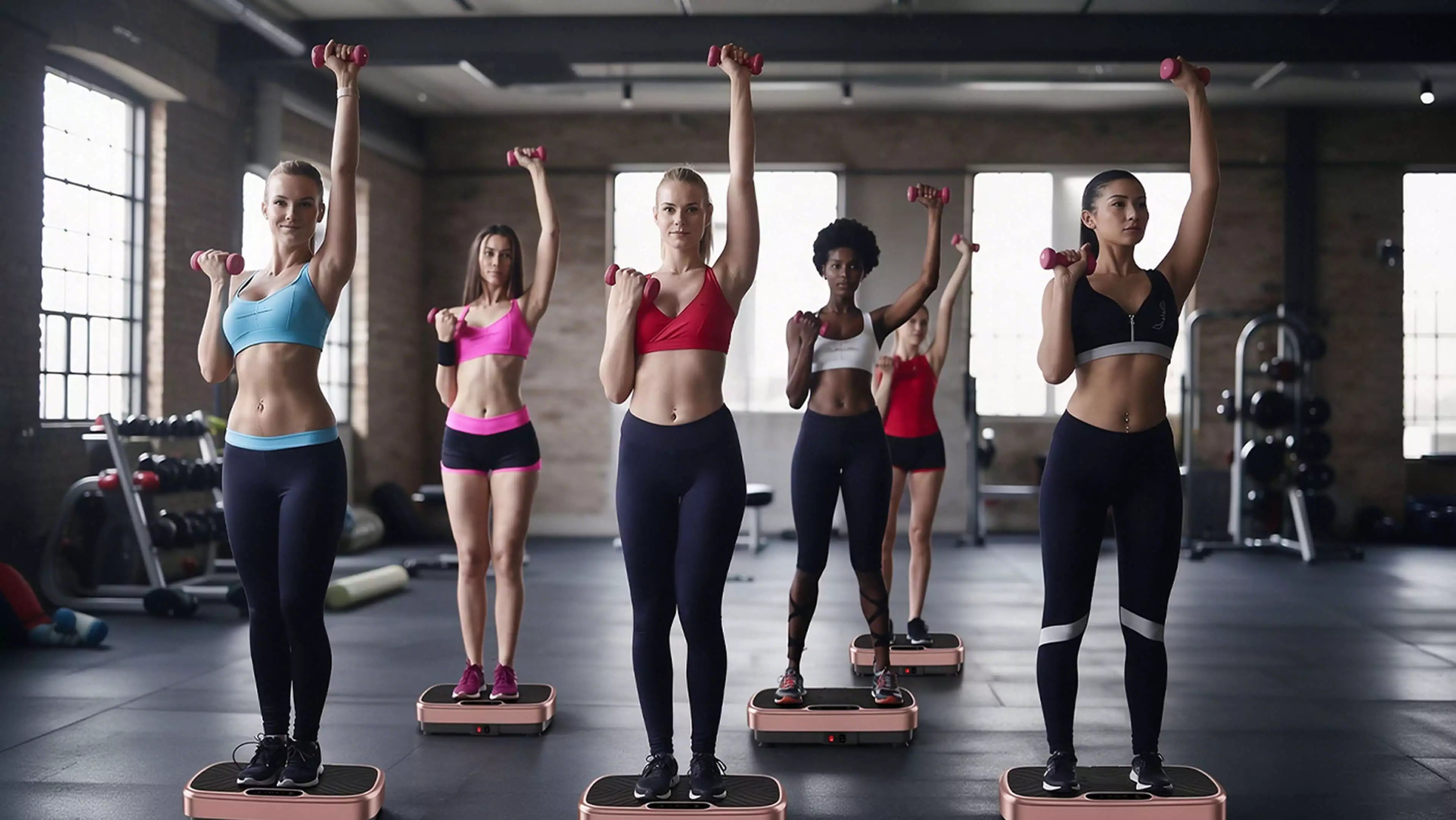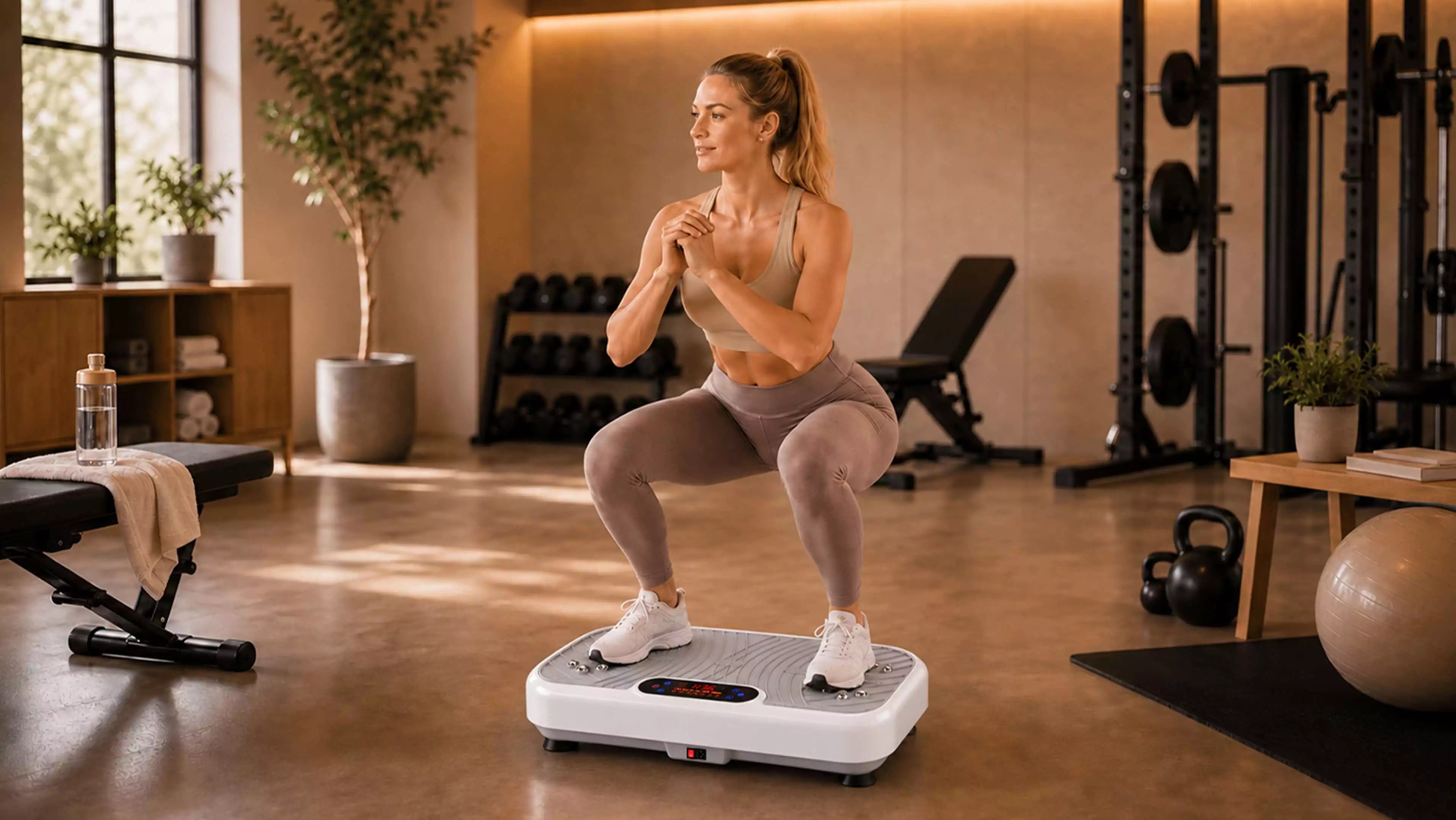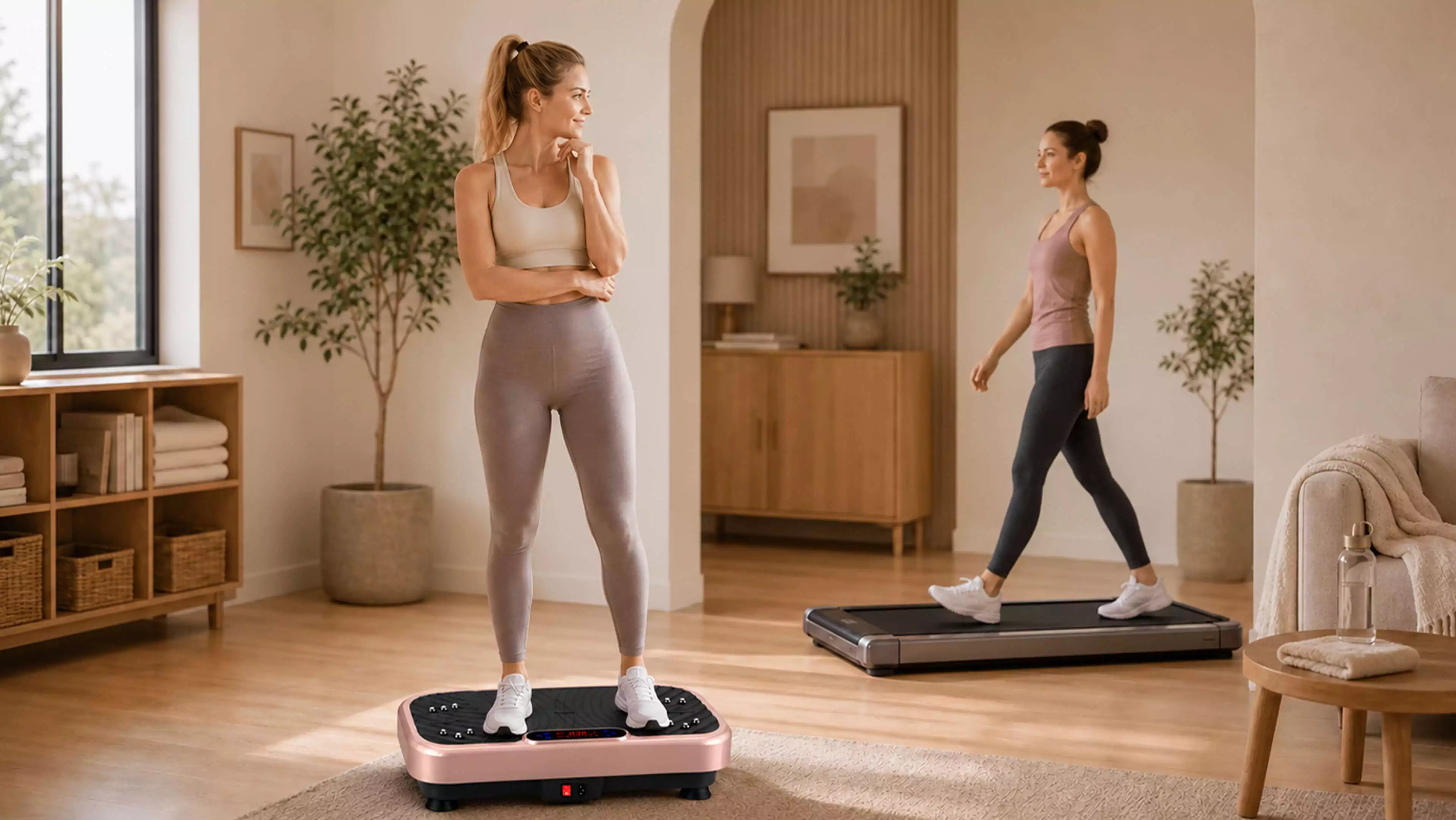
Both vibration plates and walking pads have become popular home movement options. They're quite different in how they work, who they're best for, and what they actually deliver. Here's an honest side-by-side.
How They're Different
A walking pad is essentially a compact treadmill - you walk on it. The movement is active, cardio-based, and requires engagement. A vibration plate vibrates while you stand on it - the movement is more passive, lower impact, and requires less physical effort.
Neither is objectively better. They serve different purposes.
When a Vibration Plate Might Be Right
You want movement that requires minimal effort to start
You have very limited time (5-10 minutes counts)
You prefer something you can use during a TV show or work call
You have a small space (21.7" x 13.4" footprint)
You're a beginner and want to build a low-friction habit
When a Walking Pad Might Be Right
You want active cardiovascular movement
You enjoy walking and want to do it at home
You have more floor space available
You want to track steps or distance
You prefer more traditional exercise formats
The best home fitness equipment is the one you'll actually use. Choose based on your real habits, not the most optimistic version of yourself.
What About Cost?
Walking pads vary widely in price depending on quality, and vibration plate pricing can vary too. Check the WATEYA Vibe Plate Core product page for the current price. Both are one-time purchases with no ongoing fees.
Our Honest Recommendation
If you want to add movement to your day with minimal friction and you enjoy passive or low-effort activity, a vibration plate like WATEYA may be a great fit. If you want to walk more and need a home option for that, a walking pad is probably the better choice. Both can coexist in the same home - they solve different problems.